

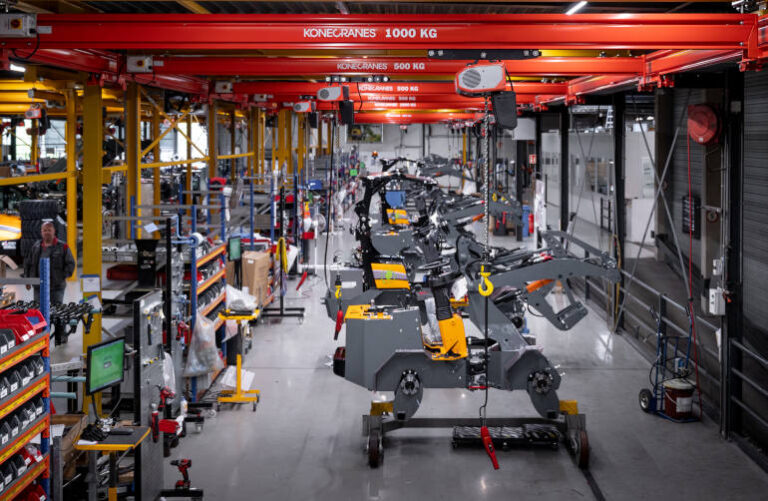
Safety, ergonomics, and efficiency remain central to manual handling across manufacturing and assembly in Australia and New Zealand. To support operators in these demanding industries, Konecranes has introduced the latest generation of its KBK workstation lifting systems, building on 50 years of proven global use with new features for modern lifting needs.
Rowland Hudd, National Sales Manager – Industrial Equipment, Konecranes Australia and New Zealand, said the updates deliver more flexibility for local industry.
“Updates to both the structural and component elements of the latest Konecranes KBK systems enable increased lifting capacities and configurations, for low investments,” he explained.
Light lifting workhorses
The new KBK steel and aluminium workstation cranes are designed for tasks requiring precise and repetitive lifts of up to 2 tonnes. Applications range from HVAC, transformers, and electrical equipment to food and beverage, metals, plastics, machining, and maintenance.
Often complementing larger production cranes, KBK systems maximise space and improve workflow in busy industrial settings. Importantly, their “load follows user” principle ensures smooth, controlled operation.
“Force equivalent to less than 1% of the lifted load is all that is required to move the system, making it outstandingly efficient for manual handling,” said Hudd.
This time-saving direct path movement shortens cycle times and boosts operator productivity.
Safety and compliance
All KBK systems comply with AS 2550 – safe use of cranes, hoists, and winches. Companies are required to service and maintain equipment while assessing remaining design life to ensure ongoing safety.
“These assessments are an ideal time to examine if business requirements have grown and changed. For very minor costs and changes, a KBK workstation crane upgrade may be able to double lifting capacity within the same space,” Hudd said.
By reducing manual handling risks, KBK systems also help organisations prevent repetitive strain and other workplace injuries.
Flexible design
With pre-engineered components, the KBK range can be configured to fit specific site requirements, even using existing structures to save time and cost. Larger steel and aluminium profiles now allow greater crane spans and longer suspension distances.
“When lifting needs increase, it’s simple to replace smaller profiles and reuse the suspensions with a larger profile by replacing the track sections – it’s a cost-effective like-for-like replacement,” Hudd added.
Lifecycle Care
As part of its Lifecycle Care approach, Konecranes supports KBK workstation cranes with end-to-end service, optimisation, and real-time digital insights. This helps customers maximise productivity, minimise downtime, and extend asset life.
“Through this Lifecycle Care approach, the customer can consistently optimise the crane, gather valuable insights and data, and connect to real-time data, including remotely,” said Hudd.
With safety, flexibility, and efficiency at the forefront, the latest Konecranes KBK workstation cranes are positioned to deliver strong benefits for Australasian manufacturing and industrial operators.