
Fleet workshops across Australia face the same challenge: how to attract, train and retain the next generation of mechanics and technicians. Skills shortages are intensifying, and the automotive industry competes with other trades for young talent. For Fleet Managers, the question is not only how to bring apprentices through the door, but how to ensure they stay and succeed.
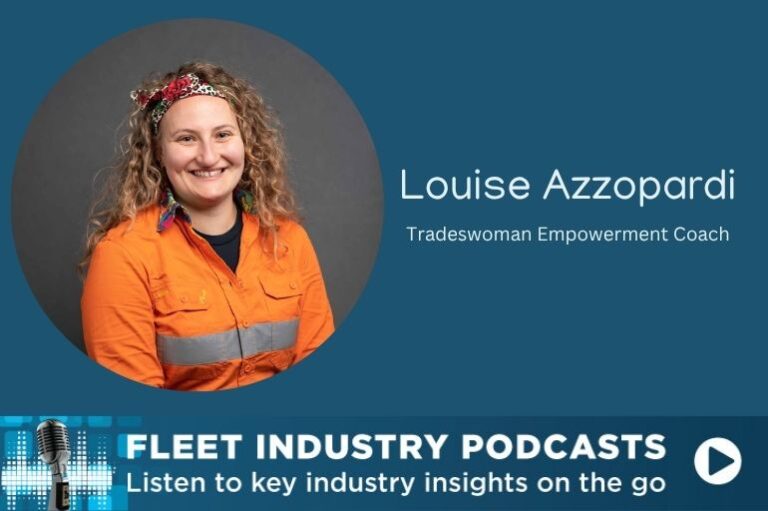
In a recent Fleet News Group podcast, industry ambassador and trainer Louise Azzopardi shared advice that every fleet workshop can put into practice.
1. Make Work Experience Count
One of the most effective ways to inspire young people is to let them try the job.
“Work experience works for both sides,” Louise explained. “Students can prove that they can rock up on time, that they’re polite, that they can learn. And for the employer, it’s better than a résumé and an interview.”
Workshops that open their doors to school students—even for a Saturday washing trucks or shadowing technicians—can identify potential apprentices early while showing them the variety of work on offer.
2. Build a Shame-Free Learning Culture
Apprenticeships are about learning through mistakes. Creating an environment where young people can admit errors without being belittled is crucial.
“An apprenticeship is pretty much four years of making mistakes, and that’s how you learn,” Louise said. “Being able to create a shame-free environment where people can talk about what went wrong helps them reflect and improve.”
Replacing “bully teaching” with constructive coaching builds confidence and develops resilience in young staff.
3. Pair New Starters With Buddies
Many large organisations employ dedicated apprentice mentors, but even smaller fleets can implement a buddy system.
“It’s important that new people have someone to go to consistently,” Louise advised. “That buddy doesn’t need to be in the same role—it might just be someone who knows how the business runs.”
This simple step reduces overwhelm for new starters and helps them adapt faster to workshop culture and expectations.
4. Train Leaders to Teach
Not every great tradesperson is a great teacher. Many workshop supervisors have never been taught how to mentor apprentices effectively.
“Being a tradie doesn’t mean you’ve learned how to teach,” Louise pointed out. “Give your leaders some training in communication and teaching. Otherwise they just copy the way they were taught, which may not be the best way.”
Short leadership and coaching courses can help supervisors turn from technicians into role models.
5. Define Milestones and Career Pathways
Apprentices need to know what success looks like. Setting out a clear plan makes expectations fair and progress measurable.
“If you want people to grow, make those milestones,” Louise said. “For example, three months in, service a vehicle on your own; six months in, rewire a piece of equipment. If you don’t know what you’re improving to, it’s hard to know if you’re on the right track.”
Providing structured pathways also gives young people confidence that they’re building toward a long-term career, not just a job.
6. Share the Tough Jobs Fairly
Every workshop has tasks like cleaning or wash bays. But dumping them all on apprentices undermines their learning and motivation.
“At Cummins we had five apprentices, so we rostered wash bay duties,” Louise recalled. “Everyone had a turn, but we also had time to actually learn technically.”
Spreading routine jobs across the team shows respect for apprentices and reinforces that everyone contributes.
7. Embrace Diversity as an Advantage
Diversity is not just about ticking a box. It’s about building stronger teams with different perspectives.
“The idea of diversity is to have different ideas and different experiences,” Louise said. “Even as an apprentice, the bigger guys would ask smaller people like me for help—we could fit in the spaces they couldn’t. Everyone has something to offer.”
For fleet workshops struggling to fill roles, embracing a wider pool of candidates—including women and people from under-represented backgrounds—opens the door to talent and fresh thinking.

- Scania to showcase Super 11 at Waste Expo Australia 2026
 Scania Australia will showcase its Super 11 heavy-duty rigid trucks at Waste Expo Australia 2026, targeting waste operators with a combination of lower tare weight, improved fuel efficiency and safety systems suited to urban collection work. The range includes 8×4 front-lift and 6×4 hook-lift configurations, with low-entry P-cabs designed to support drivers working in demanding,
 - MAN TGS wins 2026 Fleet Truck of the Year – Heavy DutyThe MAN TGS has been named the 2026 Fleet Truck of the Year – Heavy Duty, taking the top spot in the Fleet News Group Best Value Analysis with an overall score of 7.730 out of 10. The MAN finished ahead of the Hino 700 Series, which scored 7.600, and the Volvo FH16, which recorded 7.495, making the Heavy Duty category one of
- IVECO Daily wins 2026 Fleet Truck of the Year – Light DutyThe IVECO Daily Cab Chassis 50C has been named the 2026 Fleet Truck of the Year – Light Duty, finishing on top of the Fleet News Group Best Value Analysis with an overall score of 6.010 out of 10. The Daily finished ahead of the Isuzu NPR , which scored 5.741, and the Hino 300 Series, which recorded 5.030. While all three finalists
- Mack’s Heavy Hitters Get a Bold New FaceMack Trucks Australia has refreshed two of its heavy-duty workhorses, giving the Trident and Super-Liner a new locally developed front-end design that draws heavily on the brand’s Australian heritage. The updated trucks adopt a more squared-off appearance, complemented by quad seven-inch LED headlights designed to improve nighttime visibility for drivers. Mack says the project was
- DFAC Captain 45 Arrives Ready for the JobDFAC Trucks has teamed up with MW Manufacturing to give its Captain 45 a locally developed WorkReady alloy tray, creating a turnkey light truck package aimed at Australian trades, owner-drivers and fleet operators. The new tray was designed in conjunction with DFAC in Australia, with support from the company’s factory in Xiangyang, China, and developed