
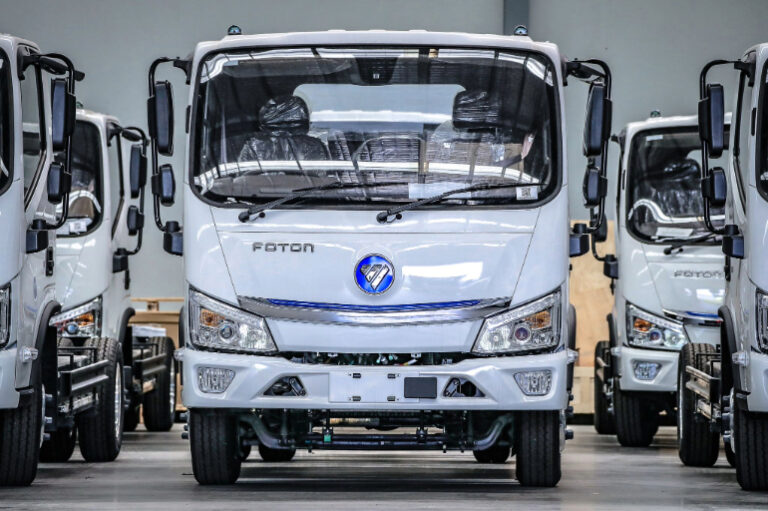
Woolworths is set to operate what is believed to be Australia’s largest battery-electric truck fleet, with its total Foton electric truck deployment expected to reach 280 vehicles following the latest Zenobē Australia arrangement.
The Clean Energy Finance Corporation has committed up to $22 million to support Zenobē Australia’s acquisition of up to 148 Foton T5 battery-electric trucks for Woolworths’ last-mile grocery delivery operations.
Those vehicles form part of Woolworths’ broader electric truck rollout, rather than being additional to the 280-unit total.

Speaking at the Smart Energy Conference and Exhibition earlier this year in Sydney, Foton Mobility Distribution General Manager Bill Gillespie said Woolworths would reach 280 Foton last-mile electric trucks by September.
“Woolworths, by September, they’ll have 280 of our last mile trucks,” Gillespie said.
The rollout has accelerated rapidly since Woolworths took delivery of its first electric truck in July 2023.
“Since they took the first delivery of that Woolworths truck in July 2023, they’ve gone from one and now this year, so three years later, they will deliver their 280th truck,” Gillespie said.
The fleet is already operating across a large part of Australia’s east coast and southern delivery network.
“They’re operating from Cairns all the way around to Adelaide,” Gillespie said. “We haven’t done any in Tasmania yet or WA but they are going to be next.”
The Zenobē-backed component will support deliveries in New South Wales and Victoria, with further vehicles planned for Queensland, Western Australia and South Australia. The full rollout is expected to be completed during 2027.
With 280 electric trucks in operation, Woolworths will have considerably more practical experience running battery-electric freight vehicles than most Australian transport operators. The fleet will provide real-world insight into range, charging, depot energy use, vehicle reliability, maintenance, driver acceptance and route planning across high-frequency grocery delivery work.
The Foton T5 has become the central truck in Woolworths’ electric fleet strategy. Its medium-duty configuration and predictable depot-based delivery task make it well suited to last-mile freight operations, where trucks can return to base for charging and operate on relatively consistent daily routes.
The Zenobē leasing arrangement is also designed to lower the financial barriers to electric truck adoption. Zenobē retains ownership of the vehicles, while the lease package includes maintenance, warranties and upgrades. That reduces Woolworths’ exposure to residual-value and end-of-life risk.
CEFC Head of Infrastructure Julia Hinwood said large-scale deployments were needed to create the operating data and confidence required for wider electric truck adoption.
“With fuel price volatility and supply risks increasingly material for freight operators, early large-scale deployments are critical to generating the real-world performance data and operating benchmarks needed to underpin a secondary market for electric heavy vehicles,” Hinwood said.
For the wider freight sector, Woolworths’ 280-vehicle rollout is significant because it moves electric trucks well beyond the pilot stage. It creates one of Australia’s largest real-world demonstrations of battery-electric trucks working every day in demanding commercial delivery operations.