

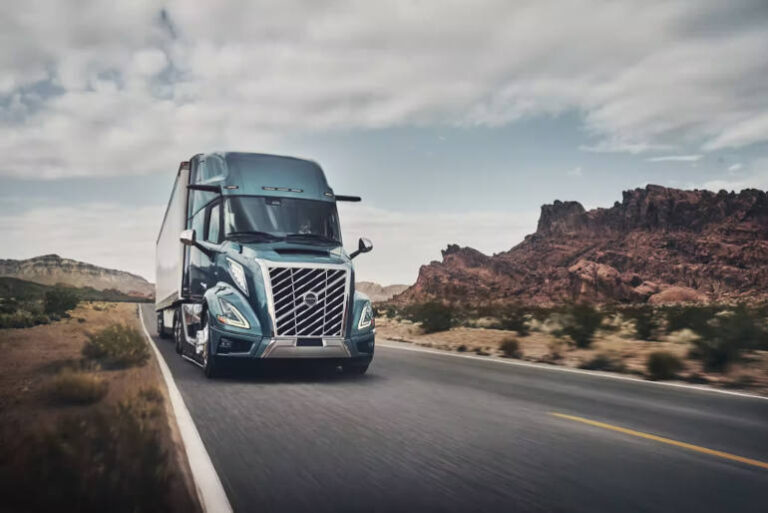
Transport decarbonisation in the United States remains active and innovative, but is navigating a new landscape shaped by political change and policy uncertainty, according to the State of Sustainable Fleets 2025 Market Brief. For Asia-Pacific observers, the developments offer both cautionary and inspiring insights into how the U.S. is balancing clean transport goals amid changing federal leadership.
States lead as federal support wavers
The transition in the White House and Congress has brought efforts to “roll back, or at least pause, previous investments and commitments supporting BEVs” (battery-electric vehicles), including vehicle tax credits and major grant programs under the Infrastructure Investment and Jobs Act (IIJA) and Inflation Reduction Act (IRA).
However, state governments are taking the lead. California, long at the forefront of zero-emission vehicle (ZEV) policy, recently suspended certain fleet mandates under its Advanced Clean Fleets (ACF) rule—but only for private-sector fleets. Requirements still apply to state and municipal operations.
Despite this, California’s regulatory environment and financial incentives continue to influence national strategy. Billions have already been invested in infrastructure and vehicles, and companies with operations across the U.S. are now looking to expand ZEV deployment outside California to other regions with better vehicle fit or stronger incentives.
Infrastructure buildout continues
Massive federal and state investments have laid the foundation for electrification. Over $13.5 billion remains available through more than 600 state and local programs for ZEV and near-zero emission (NZE) projects including BEVs, natural gas, hydrogen, and renewable diesel.
Private investment is also accelerating. The report highlights the opening of the U.S.’s first megawatt-speed EV truck charging station and a surge in fleet-focused charging hubs, particularly around major ports and logistics centres.
Technology mix expands
BEV adoption continues to grow, particularly for medium-duty and local delivery applications. In 2025, U.S. electricity demand from commercial vehicles is projected to surpass 1,100 GWh/year, more than double the 2024 estimate.
Hydrogen fuel cell vehicles are emerging for transit and heavy-duty applications, although infrastructure and market maturity remain challenges. Meanwhile, renewable diesel is gaining traction, with 39% of fleets surveyed using it and several OEMs endorsing compatibility with blends up to 99%.
Compressed natural gas (CNG) and renewable natural gas (RNG) also remain part of the U.S. fleet decarbonisation landscape, especially in refuse and transit fleets where range and refuelling speed are critical.
Policy patchwork creates uncertainty—and opportunity
While some U.S. states have banned ZEV mandates (notably Kansas, Kentucky, North Carolina, and Ohio), others are pushing ahead. Ten states and the District of Columbia have adopted the ACT rule requiring OEMs to sell more ZEV trucks, and 17 states have signed a memorandum to promote ZEV adoption.
This patchwork is prompting fleets to adopt a more tailored approach, scaling decarbonisation strategies to local policies, utility readiness, and operational needs. With federal guidance fluctuating, many fleets are looking for certainty and continuity at the state level.
Implications for Asia Pacific
For transport leaders in the Asia Pacific region, the U.S. experience highlights the importance of:
- State-level leadership when national support shifts.
- Technology diversity to suit various use cases.
- Private and public investment in charging and refuelling infrastructure.
- Incentive design that supports adoption without creating unintended barriers.
The report concludes that despite “regulatory uncertainty and slowed momentum,” the U.S. fleet sector is undergoing a durable transformation. “Investors and companies committed to this market will double down and innovate to seek a return on their investments.”
For Asia Pacific stakeholders, the message is clear: policy consistency matters, but long-term commitment, technology readiness, and public-private collaboration are the keys to a successful transport decarbonisation journey.