

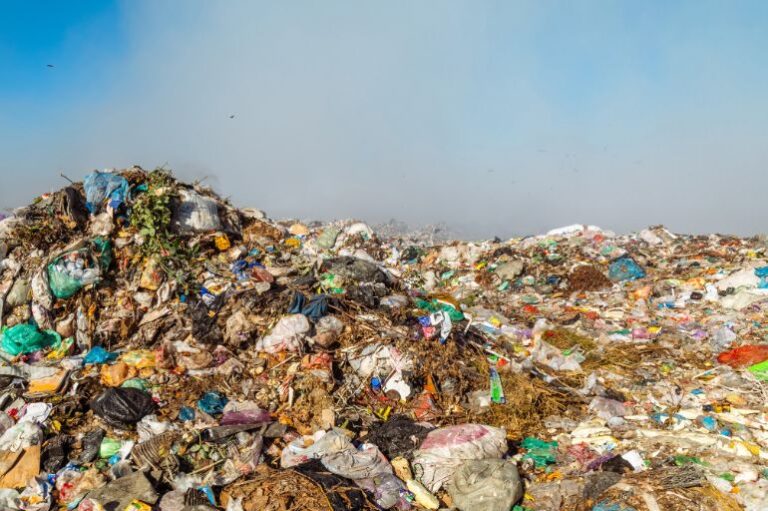
Australia’s household and commercial waste could become a major source of locally produced hydrogen and low-carbon liquid fuels for the heavy transport industry, according to XSeed Solutions Director and Co-founder Craig Allen.
Speaking at TruckShowX, Allen outlined a proposed network of regional sustainability precincts that would convert organic-rich waste into hydrogen, methanol and electricity.
The model is designed to address two major emissions sources at the same time: landfill waste and diesel-powered transport.
“We’re looking to effectively turn a product that has no value at the moment into a product that has value,” Allen said.
XSeed estimates there is enough suitable waste generated in Australia to produce energy equivalent to approximately 12 billion litres of diesel each year.
Allen said this could potentially support much of the medium- and heavy-duty truck sector while reducing Australia’s reliance on imported fuel.

Turning landfill into transport fuel
The waste targeted by the process includes red-bin, green-bin and commercial and industrial waste.
According to Allen, a large proportion of this material is organic, particularly where food and garden organics are not collected separately.
XSeed’s process uses pyrolysis and gasification technology to break down the waste and produce hydrogen, captured carbon dioxide and a solid material that could be used in applications such as road base.
The hydrogen could be supplied directly to fuel-cell or hydrogen-combustion vehicles, used to generate electricity for battery-electric vehicle charging, or combined with captured carbon dioxide to produce methanol.
Methanol is central to the company’s distribution strategy because it can be handled as a liquid and transported using infrastructure similar to conventional fuels.
Allen said one tanker of methanol could carry the equivalent hydrogen content of approximately 12 tankers of compressed hydrogen gas.
This could reduce some of the storage, compression and transport challenges that have slowed the development of hydrogen refuelling networks.
At a fleet depot or regional refuelling site, the methanol could be converted back into hydrogen or electricity using modular reforming and fuel-cell equipment.
A more predictable fuel price
Allen said XSeed was targeting a production cost equivalent to approximately $2 per litre for liquid fuel or between $10 and $12 per kilogram for hydrogen.
While future diesel prices remain uncertain, locally produced waste-derived fuel could be supplied under longer-term contracts.
“You can lock in long-term contracts for your hydrogen offtake at a relatively stable price,” he said.
That price certainty could help transport operators develop stronger business cases for hydrogen, battery-electric or dual-fuel trucks.
It could also reduce one of the risks facing fleets that are considering new powertrains: uncertainty about the long-term cost and availability of energy.
Allen argued the benefits extend beyond replacing diesel.
He said landfill waste generated emissions comparable to, and potentially greater than, those produced by Australia’s medium- and heavy-duty transport sector.
By avoiding landfill emissions and displacing fossil fuel, the process could deliver a carbon-negative outcome rather than simply achieving net zero.
Regional production network
XSeed’s proposed model would use existing landfill sites and waste facilities as locations for distributed energy precincts.
Allen said Australia has approximately 1,300 landfill sites, many located close to major transport routes, electricity infrastructure and regional industrial centres.
The company envisages developing between 70 and 80 larger production precincts, supported by smaller refuelling and energy facilities.
Each precinct could receive waste, produce hydrogen and methanol, support electric vehicle charging and distribute liquid fuel to surrounding transport and industrial markets.
Unlike centralised oil refining, the distributed model could provide fuel production capacity across regional Australia.
Allen said it could also create employment, support local energy security and give regional communities an alternative to continually expanding landfill operations.
Gippsland project planned
XSeed is progressing its first proposed project in Gippsland, Victoria.
The facility is expected to process approximately 150,000 tonnes of waste each year and produce around 15,000 tonnes of hydrogen.
Allen said that volume could theoretically support several thousand trucks, although demand from road transport is unlikely to reach that level immediately.
As a result, the project is also targeting shipping, aviation, data centres and stationary power generation.
Methanol can be used directly or as a feedstock by the maritime sector and could provide a future pathway into sustainable aviation fuel.
The Gippsland facility could also supply electricity or replacement fuel for diesel generators used by data centres and industrial operations.
XSeed expects the precinct could begin operating around 2028, subject to planning, approvals and regulatory development.
Powertrain agnostic infrastructure
Allen stressed that the model was not dependent on one vehicle technology winning the transition away from diesel.
Hydrogen could be used in fuel-cell trucks, hydrogen combustion engines or dual-fuel applications. It could also generate electricity for battery-electric trucks.
That flexibility could allow infrastructure to serve mixed fleets and adapt as vehicle technology develops.
“We are powertrain agnostic,” Allen said.
For fleets, the proposal represents a different way to consider the energy transition.
Instead of treating waste management, electricity generation and transport fuel as separate challenges, XSeed’s model combines them into a single regional system.
The technology still faces regulatory, commercial and infrastructure hurdles, but Allen believes waste-derived fuels could provide Australia with a locally produced and scalable alternative to imported diesel.
The opportunity, he argued, is to stop viewing landfill as the end of the waste cycle and start treating it as the beginning of a new fuel supply chain.