
Australian Trucking Association (ATA) CEO Matthew Munro delivered a concise but impactful address at the Road Freight NSW 2025 Conference and Awards, outlining the organisation’s top priorities for the road transport industry.
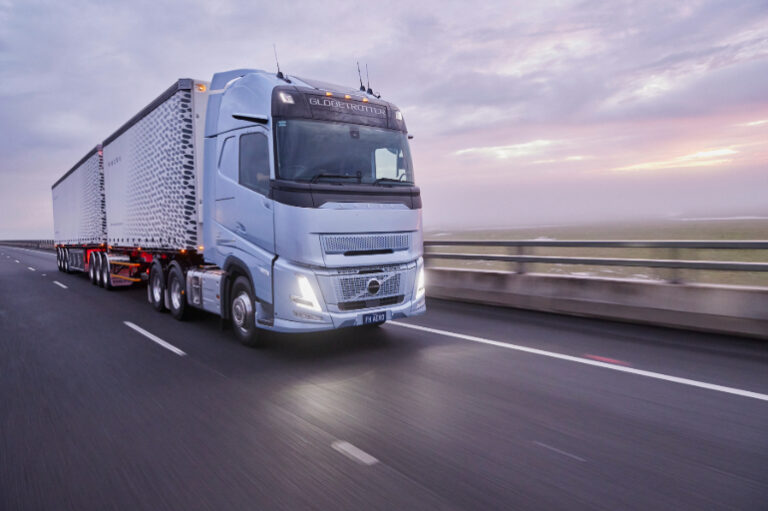
Speaking as an awards partner for the event, Munro reaffirmed the ATA’s focus on safety, sustainability, infrastructure, and workforce development, backed by its 11 member associations and foundation sponsors NTI, Volvo, and BP.
Licensing Reform and Skills Recognition
Munro emphasised the need for faster and more practical driver licensing pathways. He noted that the ATA is advocating for reforms that could cut six to nine months off the current process, helping industry attract and train competent drivers more efficiently.
He also confirmed a significant step forward in recognising trucking as a skilled profession. The ATA successfully lobbied for articulated truck and tanker drivers to be reclassified from skill level four to skill level three. This change opens the door for inclusion on Australia’s priority skilled migration list and greater access to government funding for apprenticeships and training programs.
Decarbonisation Pathways
Decarbonisation is a key focus for the ATA, with Munro highlighting the Association’s independent modelling. The ATA plan proposes a voucher scheme to lower the upfront costs of low-emission trucks, support for renewable diesel production, and improved access for high productivity freight vehicles. These measures could cut truck emissions by 35 million tonnes by 2050.
Recent federal government announcements align with this vision, including a $1.1 billion commitment over 10 years to incentivise renewable diesel production, as well as the release of the Transport Infrastructure Net Zero Roadmap and Action Plan.
Supporting the Industry
Munro also acknowledged the industry’s concerns about workers compensation costs and independent contractors, pledging the ATA’s continued collaboration with members and suppliers to address these issues.
Finally, he shifted focus to the awards, congratulating nominees and winners while encouraging more operators to put forward their colleagues for the ATA National Trucking Industry Awards, which regularly highlight New South Wales leaders on the national stage.
“By rewarding a few, we hope to inspire the many,” Munro said.
- NHVR signals major shift in heavy vehicle regulation
 The National Heavy Vehicle Regulator (NHVR) is planning a significant change in how it regulates Australia’s trucking industry, moving away from traditional roadside compliance checks towards a more proactive, risk-based approach driven by data and intelligence. Speaking at MOVE Australia 2026 in Sydney, NHVR CEO Nicole Rosie outlined a vision for a regulatory system that
- Trucking alliance targets diesel costs and electric truck uncertaintyTruck operators will be offered free guidance on cutting fuel consumption and assessing new vehicle technology through FLEETLEAP, an industry alliance launched at the NatRoad National Conference on the Gold Coast. The initiative brings together transport associations, energy specialists and technology providers, with a focus on helping businesses identify practical savings and make informed decisions
- 15 new fire trucks boost emergency response capability across NSWFire and Rescue NSW (FRNSW) is expanding its frontline fleet with 15 new fire trucks being deployed to stations across Sydney, Wollongong and the Blue Mountains. Announced in October, the new vehicles feature enhanced safety systems, improved communications and satellite connectivity, providing firefighters with modern equipment to support emergency response operations. Minister for Emergency Services
- Why every vehicle should have a driver distraction cameraArticle by Microlise The heavy vehicle transport sector is one of Australia’s most dangerous industries, with truck drivers 15 times more likely to suffer a fatal workplace injury than the average Australian worker1. According to the National Heavy Vehicle Regulator (NHVR), driver fatigue and distraction are the two leading causes of heavy vehicle accidents2. For
- Hino eyes 2027 recovery as truck market downturn tests fleet confidenceAustralia’s truck market is facing another difficult year, with weaker business confidence and delayed purchasing decisions weighing on sales. But Hino Australia believes growing freight demand and ageing fleets will eventually bring buyers back, even if the timing of a recovery remains uncertain. Speaking at an exclusive media briefing during the launch and drive of