

When fleet buyers compare trucks, safety discussions often focus on crash avoidance technology such as emergency braking, lane support, cameras and driver monitoring.
Those systems are important. But they are only one part of the safety equation.
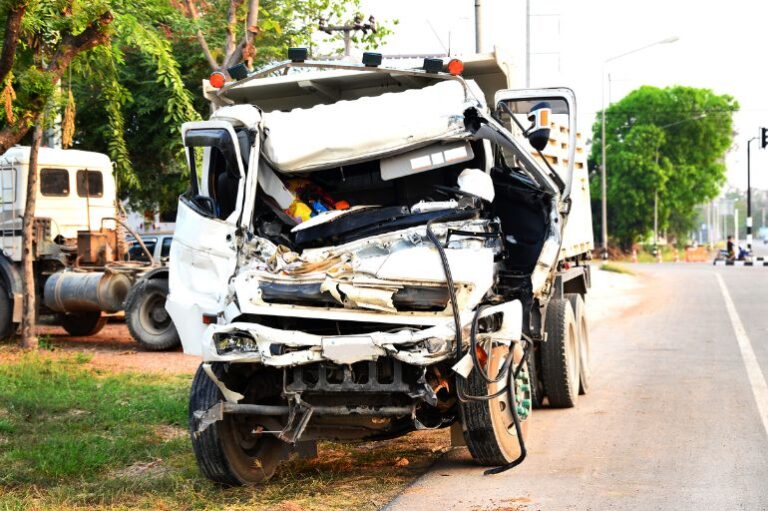
Passive safety is what protects the driver and passenger when a crash, rollover or impact cannot be avoided. It includes the strength of the cab, the way the vehicle manages crash forces, occupant restraints, airbags, seat design and the systems that support rescue after an incident.
For fleet buyers, passive safety should be assessed early in the procurement process. It should not be treated as a standard inclusion that will be the same across all truck models, cab types and specifications.

Start with the cab structure
The cab is the driver’s protective shell.
Ask manufacturers how the cab has been designed and tested to protect occupants in frontal impacts, side impacts and rollovers. The key objective is to preserve a survivable space around the driver and passenger.
Questions for suppliers should include:
- What rollover testing has been completed on this cab?
- How does the cab manage frontal crash energy?
- What reinforcement is used in the roof, pillars, doors and cab frame?
- Is the cab structure different between day cabs, sleeper cabs and low-entry models?
- Does the cab meet recognised European or international crash and rollover standards?
- Does the body installation affect the protection offered by the cab?
This is particularly important for vocational fleets. Waste vehicles, tippers, agitators, construction trucks, fire appliances and regional-service vehicles may face a higher likelihood of uneven ground, rollover exposure or impacts outside normal highway conditions.
Check the seatbelt specification
A seatbelt is still the most important passive safety feature in a truck cab.
Fleet buyers should confirm whether the truck has three-point inertia-reel belts for all seating positions and whether the belts include pretensioners and load limiters.
Pretensioners tighten the belt immediately in a crash to better secure the occupant. Load limiters are designed to manage the force transferred through the belt during a serious impact.
Ask:
- Are pretensioners fitted to the driver’s seat?
- Are load limiters included?
- Are all passenger seats fitted with three-point seatbelts?
- Are seatbelt reminders standard?
- Is the seatbelt mounted to the seat or the cab structure?
- Are there differences between seating options?
These details matter in a rollover, where an unrestrained occupant can be thrown into the cab structure or partially ejected.
Ask about airbags, especially rollover protection
Airbags are not standard across all heavy vehicle models, cab types or markets.
Driver airbags are becoming more common, but fleet buyers should also ask whether side curtain or rollover curtain airbags are available. These can provide important protection in a rollover by helping keep the occupant’s head and upper body within the cab.
Questions to ask include:
- Is a driver airbag standard or optional?
- Are side curtain airbags available?
- Is a rollover curtain airbag offered?
- Are airbags available on the specific cab variant being purchased?
- Do seating, sleeper or interior-package choices affect airbag availability?
A fleet operating on rural roads, construction sites, uneven worksites or high-centre-of-gravity applications should give particular attention to rollover protection.
Review the driver’s immediate environment
A crash does not only involve the external structure of the cab. The interior layout also affects injury risk.
Manufacturers use energy-absorbing steering columns, padded surfaces, rounded controls, better head restraints and carefully designed dashboards to reduce the severity of occupant contact in a crash.
Fleet buyers should ask:
- Is the steering column energy absorbing or collapsible?
- How is the dashboard designed to manage occupant contact?
- Are there exposed hard surfaces or aftermarket accessories that could increase injury risk?
- What head restraints are fitted to the driver and passenger seats?
- Are seats designed to remain secure under high crash loads?
The fit-out also matters. Accessories such as fridge mounts, communications equipment, tablets, tool storage and loose cab items should be reviewed as part of the safety assessment. A well-designed truck cab can still become hazardous if equipment has been added without considering crash forces.
Do not overlook the seat
A truck seat is not simply a comfort item.
It needs to support the driver during a crash, keep the occupant correctly positioned for the seatbelt and protect against neck and spinal injury. This is particularly relevant in high-kilometre operations, where drivers may spend long hours in the cab and fatigue can be compounded by poor seating design.
Fleet buyers should ask about:
- Seat frame strength
- Head restraint adjustment and support
- Seatbelt anchorage design
- Suspension-seat behaviour in a crash
- Whether the seat and restraint system has been tested together
- Availability of different seat options for different driver sizes and duties
A seat that improves comfort and posture can also help ensure the driver is in the right position for the restraint system to work effectively.
Include underrun protection in the specification
Underrun protection is designed primarily to protect people in smaller vehicles that collide with a truck.
Front, side and rear underrun systems can help prevent a car from sliding underneath the truck in a collision. They are particularly relevant in urban delivery, waste, construction, council and mixed-traffic environments.
Fleet buyers should confirm:
- Whether front underrun protection is fitted
- Whether side guards are available or required for the application
- Whether rear underrun protection remains compliant after body installation
- Whether the bodybuilder’s design changes the effectiveness of any underrun systems
- Whether guards are suitable for the truck’s operating environment
This is an area where the truck chassis and body specification need to be considered together.
Electric trucks add another passive safety requirement
For battery-electric trucks, passive safety also includes protection of the high-voltage system.
Fleet buyers should ask how batteries are protected from impact, how the vehicle isolates high-voltage circuits after a crash and what information is available to emergency services, workshop teams and recovery providers.
Key questions include:
- How are battery packs protected in a frontal, side or underbody impact?
- Does the vehicle automatically isolate high-voltage systems after a collision?
- Where are the emergency isolation points located?
- Is a rescue sheet available for emergency responders?
- What recovery and towing procedures apply after a crash?
- What training is required for drivers, workshop staff and incident-response contractors?
For electric fleets, these issues should be included in the broader emergency-response and incident-management plan.
Consider what happens after the crash
Passive safety does not stop at the impact.
Post-crash systems can support faster rescue, reduce secondary risk and help emergency responders safely access the vehicle. These can include hazard-light activation, emergency shut-off systems, rescue information, cab access provisions and clearly identified isolation points.
Fleet buyers should ask suppliers for:
- Rescue sheets
- Emergency response procedures
- Bodybuilder installation guidance
- Post-crash towing instructions
- High-voltage isolation information for EVs
- Details of any automatic hazard-warning or emergency-braking alerts
- Recommended inspection requirements after a serious impact
These documents should be available to fleet managers, workshop teams, drivers and external recovery suppliers before the vehicle enters service.
Make passive safety part of the tender process
The best approach is to build passive safety into the procurement scorecard rather than asking broad questions after a preferred supplier has been chosen.
A truck may have strong crash-avoidance technology but fewer passive-safety protections than another model. Conversely, a well-designed cab, restraint system and rollover package can deliver a major safety benefit even where active safety systems are similar.
A practical tender checklist should include:
- Cab crash and rollover performance
- Seatbelts, pretensioners and load limiters
- Driver, side and rollover curtain airbags
- Seat and head restraint design
- Energy-absorbing steering and interior features
- Front, side and rear underrun protection
- EV battery and high-voltage crash protection
- Post-crash rescue and isolation information
- The effect of body installation on safety performance
The goal is simple: when a crash cannot be avoided, the truck should give the driver and passenger the best possible chance of walking away.