

Chery Commercial Vehicle is signalling that its global ambitions extend well beyond selling electric trucks and vans, with the company developing an integrated commercial vehicle ecosystem spanning vehicles, charging, energy storage, fleet management and depot operations.
The company is using its latest European showcase to present the DELIVAN light commercial vehicle brand, C&C TRUCKS heavy vehicles and a broader new-energy platform that combines charging, intelligent fleet management and energy infrastructure.
For fleet operators, the strategy reflects an increasingly important shift in commercial vehicle electrification. Choosing an electric truck or van is only one part of the transition. Charging capacity, energy costs, vehicle uptime, route scheduling and data management can be just as important to the business case.
Gong Yueqiong, Vice President of Chery Holding Group and General Manager of Chery Commercial Vehicle, said the company sees three pillars underpinning its commercial vehicle business: a complete new-energy product range, intelligent digital technologies and energy solutions.
DELIVAN combines vehicles, fleet management and uptime
At the lighter end of the commercial vehicle range, Chery is preparing DELIVAN for its commercial launch in Europe and the UK in 2027.
The brand is presenting two base vehicles and four specialist conversion solutions, supported by what Chery calls its “1+3” proposition. DELIVAN I provides connectivity and fleet management capabilities, DELIVAN PRO concentrates on servicing, remote diagnostics and uptime, while DELIVAN X supports conversions and customisation through specialist partners.
That structure could be particularly relevant to fleets that increasingly expect commercial vehicle manufacturers to support the entire operating lifecycle rather than simply deliver a base vehicle.
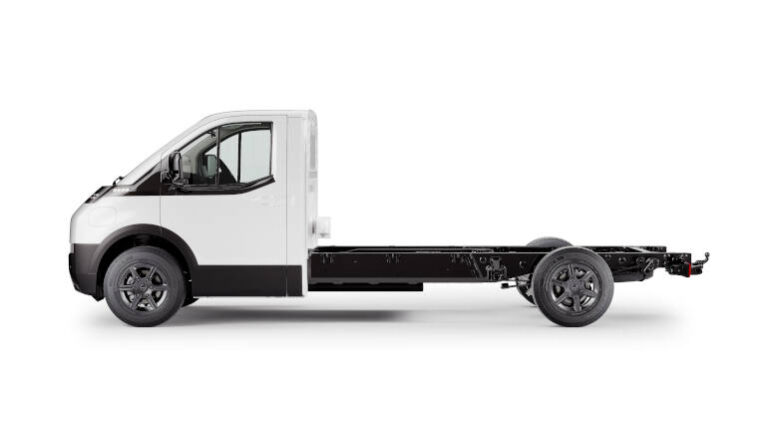
Conversions are another key part of the strategy. Chery says its medium-wheelbase high-roof platform and chassis-cab configurations are being developed for applications including parcel delivery, cold-chain transport and municipal work.
C&C TRUCKS targets fleet TCO
For heavier applications, C&C TRUCKS is developing what it describes as a global integrated fleet solution combining vehicles, energy replenishment and intelligent fleet scheduling.
The system is being developed around range, charging efficiency and total cost of ownership, bringing vehicle specification and energy management into the same fleet planning conversation.
Among the vehicles being showcased is the Phoenix BEV, which uses an electric axle and is aimed at fixed-route short- and medium-haul resource transport.
Chery is also developing a Phoenix REEV range-extender model using what it describes as a large battery paired with a compact range extender. The company says the configuration is intended for longer inter-regional operations where charging infrastructure remains limited.
That mix of battery-electric and range-extender technology highlights the different operating profiles manufacturers are trying to address as heavy vehicle fleets decarbonise.
Rather than assuming one powertrain will suit every application, Chery is positioning different technologies around duty cycle, available charging infrastructure and payload requirements.
Energy becomes part of fleet management
Perhaps the more significant part of Chery’s strategy is the integration of vehicles with depot energy systems.
Chery Energy is developing solutions around vehicle-to-grid technology, distributed battery storage and depot energy networks.
The company says fleets could use time-of-use electricity tariffs to reduce charging costs, combine solar generation with battery storage and potentially use vehicle-to-grid technology to return energy to the electricity network when vehicles are not required for operations.
For fleet managers, that changes the role of the depot.
Charging infrastructure, stationary batteries, solar generation and energy management software increasingly become assets that need to be planned, maintained and managed alongside the vehicles themselves.
Chery is also displaying V2G DC chargers, battery-swap technology, intelligent forklifts and integrated traction-and-storage battery systems as part of its wider energy ecosystem.
Autonomous logistics also enters the mix
The company is also demonstrating ROBOX, an autonomous logistics vehicle designed around an automotive-grade drive-by-wire chassis and modular body configurations.
Chery says the vehicle is intended for applications including last-mile delivery, factory logistics and cold-chain transport, using LiDAR, millimetre-wave radar and vision-based sensing together with Level 4 autonomous driving technology.
While autonomous vehicles remain a longer-term proposition for many fleets, controlled environments such as industrial sites, logistics hubs and distribution centres may provide some of the earliest opportunities for deployment.
For Australian fleet operators, the immediate significance of Chery Commercial Vehicle’s announcement is less about individual models and more about the direction of travel.
Commercial vehicle manufacturers are increasingly competing on an ecosystem that includes the truck or van, charging infrastructure, energy management, telematics, servicing, conversions and uptime management.