

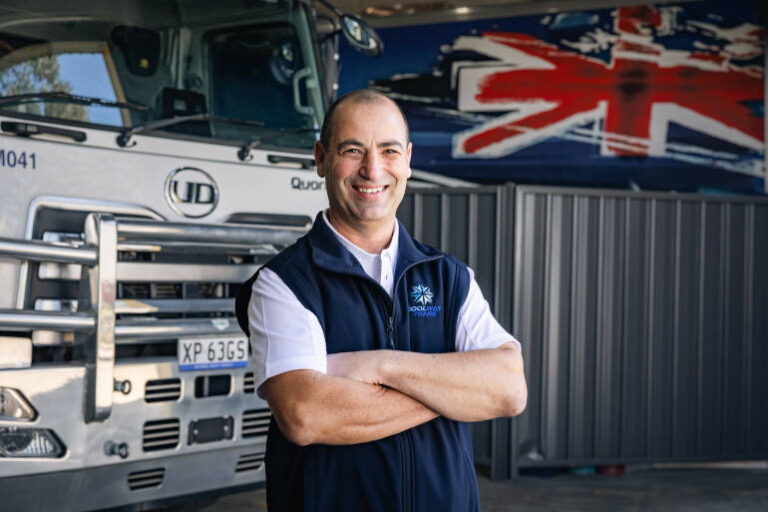
Anthony Cassar of Coolway Trans has been named Australia’s top UD driver after winning the 2026 UD Trucks Extra Mile Challenge Australia.
Cassar, representing Volvo Commercial Vehicles Australia Sydney West, secured the title after three weeks of competition. Drivers were assessed using UD Connect telematics across four areas: anticipation and braking, driveline utilisation, speed adaptation and standstill performance.
The final result was exceptionally close, with Cassar recording an average score of 82.66 and finishing only one point ahead of his nearest competitor.
The Extra Mile Challenge was launched in 2015 to demonstrate how driver behaviour can contribute to safer operations, improved fuel efficiency and reduced vehicle wear.
For fleet operators, the competition also highlights the role telematics can play in turning everyday driving data into targeted coaching and measurable operational improvements.
“Congratulations to Anthony on an outstanding result,” UD Trucks Australia Vice President Cameron Bettany said.
“The Extra Mile Challenge showcases the professionalism, skill and dedication of our drivers, and Anthony’s performance throughout the competition has been exceptional.”
Cassar brings 27 years of professional driving experience to the competition. He will now travel to Ageo, Japan, in October to represent Australia in the 2026 Global UD Trucks Extra Mile Challenge Final.
He will compete against drivers representing 16 markets, with the global finalists tested behind the wheel of the UD Quon.
Coolway Trans owner Sunny Ahmed said the victory reflected Cassar’s professionalism and commitment behind the wheel.
“We’re incredibly proud of him and this result,” Ahmed said.
“It’s a well-deserved achievement that reflects Anthony’s professionalism and dedication behind the wheel.”
Australia enters the global competition with strong credentials following owner-driver Matt Modra’s victory in the 2024 global final.
For transport fleets, Cassar’s result reinforces the value of combining skilled drivers with telematics-based performance measurement. Small improvements in anticipation, braking, speed management and idling can contribute to lower fuel use, reduced maintenance requirements and safer heavy-vehicle operations.




