




Wearable technology could give transport operators a new way to manage fatigue risk before a driver reaches the point of dangerous drowsiness.
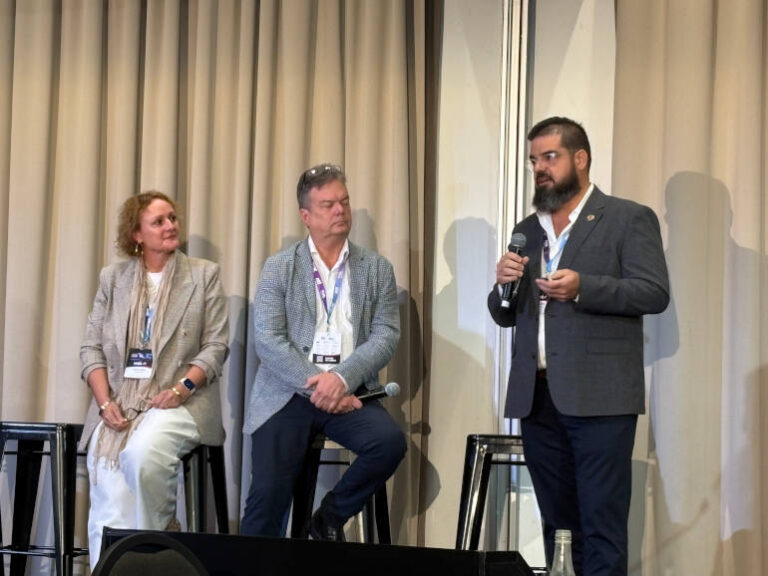
Speaking at TruckShowX, WHG Technologies Director of Operations Dylan Hartley said the transport sector had an opportunity to combine wearable devices with established in-cab camera systems to improve both the accuracy of fatigue alerts and the way fleets intervene.

Rather than relying only on cameras to identify a driver who may already be tired or distracted, wearable technology can provide a clearer picture of a driver’s readiness and attention levels.
“The technology around wearables is highly accurate,” Hartley said.
WHG Technologies is working with the NHVR and a group of operators including Wettenhalls, FBT Transwest, Linfox and Team Transport to assess how smart wearables could work in real-world freight operations.
The system uses a wearable device connected by Bluetooth to a phone, tablet or in-vehicle hardware. It monitors three levels: awake and fit to drive; attention, when fatigue may be beginning to emerge; and a fatigue alarm intended to indicate a risk point before microsleep.
That creates the potential for a more proactive response.
Wettenhalls Chief People Officer Jackie Allen said the value was not only in identifying fatigue, but in giving drivers and fleet managers more time to act.
“They are letting you know 10, 15, 20 minutes before potentially someone is feeling drowsy, or someone is not right for work,” Allen said. “You can have much earlier interventions, so you’re not getting to that holy hell, it nearly happened moment.”
For Allen, wearables may also help shift the conversation around monitoring technology. Driver-facing cameras can create resistance when drivers feel they are being watched, but a wearable device can be seen as technology working with the driver rather than watching them.
“It doesn’t look any different to my Apple Watch,” she said. “It’s technology that’s with you, and it’s really helping you monitor.”
That distinction matters in an industry where drivers can spend long periods working alone, often far from their depot, supervisor or support network.
Allen said Wettenhalls is direct with its drivers about the use of technology.
“We don’t shy away, we say we’re monitoring you,” she said. “But what we’re not doing is tracking you all day, every day, and stalking you all day, every day.”
Her message was that the purpose is clear: support the driver when they may not be able to recognise or manage a growing fatigue risk themselves.
“If you’re out on the road and you’re on your own, there is no one there monitoring you, unless we’re doing it,” Allen said. “My job is to get you home and back to your family each and every day.”
FBT Transwest Managing Director Cameron Dunn said driver acceptance had been more positive than expected when the company introduced the wearable fatigue trial.
“When we put it out to our drivers, I thought this is going to be a bit of a push,” Dunn said. “It was quite the opposite. When they heard that it was actually a wearable, and they could have some input and give some feedback, they just jumped on it.”
Dunn said participating in the trial also gave the business a chance to influence how the technology may be applied within the regulatory environment, rather than waiting for requirements to be imposed after the fact.
The trial is expected to help build evidence on operational use, driver acceptance and the role wearables could play alongside existing fatigue-management systems. That work may ultimately contribute to best-practice guidance and regulatory direction.
For fleets, the emerging lesson is that fatigue technology is moving beyond the detection of an incident. The next opportunity is earlier intervention, using multiple sources of data to identify risk before it becomes a critical safety event.
- LinCon Builds its Heavy Fleet Around Scania
 LinCon Hire and Sales is expanding its Scania fleet as the specialist access equipment operator looks for all-wheel drive capability, fuel efficiency and reliability across some of Australia’s most demanding worksites. Brisbane-based LinCon Hire and Sales has committed to a significant expansion of its Scania fleet, with the specialist elevating work platform operator taking delivery
 - FAW and Foton Build Regional Momentum With HartwigsFAW and Foton are beginning to gain traction with regional truck operators as long-established dealer Hartwigs puts demonstrator vehicles on the road and backs the emerging brands with local service and parts support. Hartwigs, a fifth-generation family dealership established in 1923, has added FAW and Foton to its truck portfolio, with the brands now being
- Scania 4×4 XT Breaks New Ground in MiningPerth-based Premium Plant Hire is expanding its Scania fleet with four P 280 4×4 XT rigids, including three trucks that will be converted into 11,000-litre water carts for mining operations in Western Australia’s Pilbara. The fourth vehicle will be configured as a service truck, extending Premium Plant Hire’s use of Scania equipment beyond the larger
- IVECO S-Way Takes on Timber TransportCity Timber has added two new IVECO S-Way AS 550 prime movers to its Melbourne-based fleet, continuing a relationship with the truck manufacturer that stretches back almost five decades. The timber wholesaler now operates 15 IVECO vehicles, including S-Way, Stralis and Eurocargo models. Its connection with the brand goes back to company founder Con Peluso,
- Halton Joinery Finds the Right Fit with Isuzu NQRFor Hobart-based Halton Joinery, choosing its latest truck was about more than adding carrying capacity. The business wanted to reduce manual handling risks, protect high-value finished products and make deliveries easier to plan. The family-owned joinery business has added an Isuzu NQR 88-190 fitted with a fully enclosed van body and hydraulic tail-lift, replacing a