
Cummins is shifting its focus from supplying individual drivetrain components to engineering the complete powertrain as one coordinated system, with the aim of improving fuel efficiency, drivability, durability and uptime for heavy vehicle fleets.
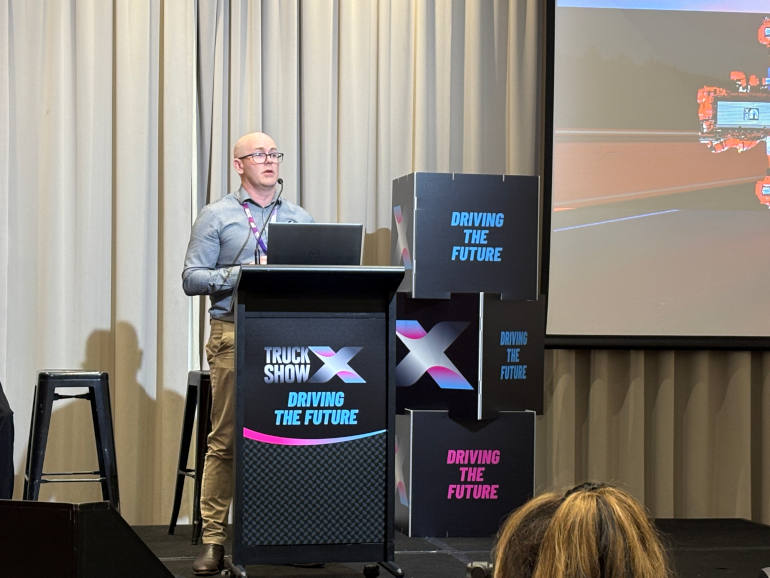
Speaking at TruckShowX, Cummins Marketing Manager Adam Carroll and Chief Engineer On Highway APAC James Foott outlined how closer integration between the engine, transmission, axles, driveline, software and vehicle controls could deliver benefits beyond those achieved by improving each component separately.

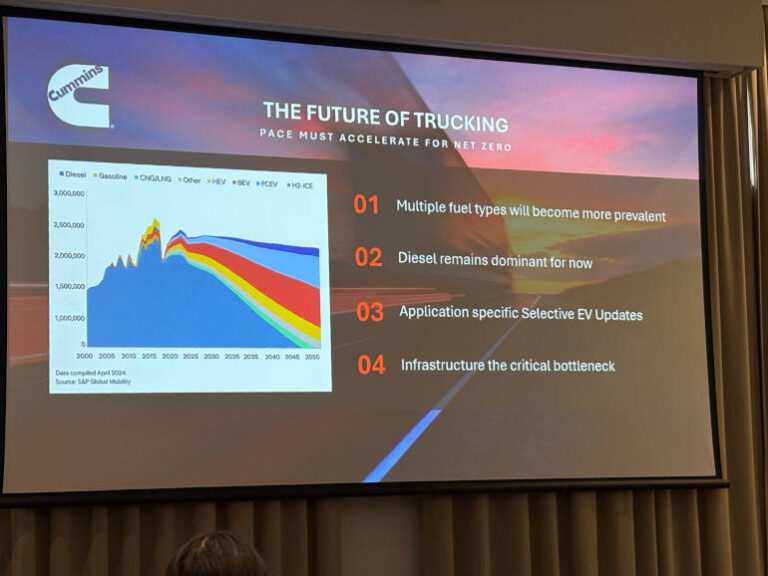
Foott said diesel would remain the primary power source for many heavy-duty applications for years, particularly where alternative energy infrastructure and vehicle capability were not yet ready to meet demanding freight tasks.
“The transition for many applications cannot be made immediately, and diesel will be the primary power source for many years,” Foott said. “So, the key point here is it makes sense to make it as efficient as possible.”
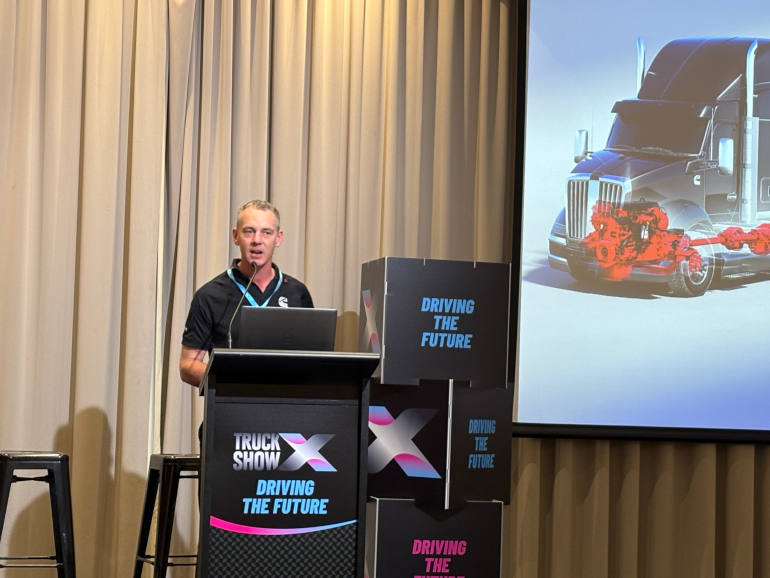
Cummins’ integrated powertrain approach combines components including its X15 diesel engine, after-treatment system, steer and drive axles, driveshaft and the Endurant XD automated transmission developed through the Eaton Cummins joint venture.
Rather than operating as separate components, the hardware and control systems are calibrated together to coordinate torque delivery, gear shifts and driveline response.
“Integration matters because system optimisation delivers more than the individual component gains,” Foott said. “We’re taking a systems approach to optimise the driveline, both hardware and controls together, to achieve further gains.”
The result, according to Cummins, should be more consistent vehicle behaviour across different drivers and operating conditions, while reducing unnecessary stress on drivetrain components.
One example already being applied locally is engine torque-rate limiting, which smooths abrupt changes in torque and reduces driveline clunk.
Foott said the feature improved the driving experience while also reducing mechanical shock through the transmission, axles and driveline.
“Not only does smoother torque response and a more consistent driveline result in a better experience for the driver, reducing fatigue, it also reduces the impact on the driveline and axle hardware,” he said.
For fleets, more predictable drivetrain behaviour could also reduce the performance differences created by individual driving styles.
Cummins is also targeting incremental efficiency gains from component changes that can be implemented immediately.
Carroll said a linehaul specification of the company’s axle was already available and could deliver an estimated fuel-efficiency improvement of between one and 1.5 per cent by removing the oil pump from the carrier.
“They’re not step changes, but they’re incremental gains that we can do today,” Carroll said. “Stuff like that will deliver gains immediately.”
Further axle developments include lighter components and passive lubrication-management systems designed to reduce parasitic energy losses.
Carroll said drive axles in long-distance trucks could exceed 100 degrees Celsius, demonstrating how much energy was being lost as heat.
“By bringing efficiency into lubrication management, we can bring the temperatures of the axles down and increase the efficiency of the truck,” he said.
Greater electronic integration could also improve safety and durability.
Cummins is developing controls that would allow the engine, transmission and axle systems to determine when an inter-axle differential lock can be safely engaged.
The system could prevent engagement while wheels are spinning, reducing the risk of serious driveline damage caused by incorrect driver operation.
Looking further ahead, Cummins is assessing predictive controls already used in other markets.
Predictive gear shifting uses GPS and road-gradient data to select the most suitable gear before a truck reaches a hill, helping maintain road speed and avoid unnecessary shifts.
Predictive engine braking uses similar information to prepare the truck for a descent, selecting gears and applying braking earlier to maintain the desired speed.
Another feature, known as dynamic power, can adjust the engine’s power rating based on the vehicle load and route conditions. This can provide stronger performance during demanding sections while reducing fuel consumption when full power is not required.
Cummins is also introducing a vehicle mission simulation tool to help customers select powertrain specifications based on their actual routes, vehicle weights and duty cycles.
Foott said controlling the data for the major drivetrain components allowed Cummins to model the complete system more accurately.
“That leads to more accurate simulations for the customers, getting the specification exactly where they need it,” he said.
The integrated approach will also underpin Cummins’ future HELM engine platforms.
HELM stands for high efficiency, low emissions and multiple fuels. The platform uses a largely common engine architecture below the head gasket, with different upper-engine components designed for diesel, renewable diesel, natural gas and, eventually, hydrogen.
This allows manufacturers to offer different fuel technologies while retaining common mounting points, transmission interfaces and servicing familiarity.
“The HELM platform gives optionality to OEMs,” Foott said.
“They’ll be able to offer diesel, including HVO, natural gas and, in the future, hydrogen, with the same fuel-agnostic platform.”
Cummins is targeting a three to four per cent fuel-economy improvement from the future heavy-duty diesel version of the HELM platform before the additional benefits of full powertrain integration are considered.
Carroll said Cummins was pursuing multiple technology pathways because no single powertrain was likely to suit every transport application.
The company has expanded beyond its traditional diesel-engine base through investments in batteries, fuel cells, electric drivetrains and axles, including its acquisition of Meritor in 2022.
However, the immediate focus for heavy vehicle fleets remains improving the performance of equipment available today.
“For now, diesel is still going to be the backbone of the freight task in Australia, especially in the linehaul space,” Carroll said.
Foott described the current transition period as the “messy middle”, with technologies developing at different rates according to infrastructure, application and duty cycle.
He said system integration provided a practical way to strengthen current fleet performance without closing off future fuel choices.
“We know that good system integration improves the baseline today, and platform thinking keeps options open tomorrow,” Foott said.
“Ultimately, the Cummins integrated powertrain strengthens today’s fleet and supports the transition to future fuels.”