




For many organisations, vehicle procurement, maintenance and fleet management have traditionally been viewed as operational responsibilities. The new Master Code of Practice under the Heavy Vehicle National Law (HVNL) makes it clear that these activities are also fundamental Chain of Responsibility (CoR) obligations.
The Master Code includes three dedicated transport activities covering vehicles and equipment: Vehicle Procurement and Fleet Management, Maintaining Vehicles and Equipment, and Equipping and Modifying Vehicles. Together they provide a practical framework for managing heavy vehicle safety throughout the entire asset lifecycle.
The message is clear: safe transport operations start long before a driver turns the key.
Fleet Procurement Is About More Than Price
One of the most significant themes in the Master Code is that vehicle purchasing decisions should be driven by suitability and safety, not simply acquisition cost.
Activity 18 – Vehicle Procurement and Fleet Management encourages businesses to assess how a vehicle will be used before purchasing or hiring it. This includes considering operating environments, payloads, routes, body configurations and the safety technologies available on the vehicle.
The Code specifically recommends considering fatigue-reducing vehicle features, advanced safety systems, body design and whole-of-life fleet management. Even when purchasing second-hand vehicles, businesses should review operating history and maintenance records before making a decision.
For fleet managers, this reinforces a principle that has long been considered best practice: the safest vehicle that meets operational requirements is often the most productive and cost-effective choice over its lifecycle.
Fleet Management Doesn’t End at Delivery
The Master Code also recognises that managing safety requires a lifecycle approach to fleet management.
One of the recommended controls is to actively manage the life cycle of the vehicle fleet. This reflects the reality that safety, reliability and operating costs are heavily influenced by decisions made long after the vehicle enters service.
As vehicles age, maintenance costs increase, reliability declines and safety technologies can become outdated. Businesses need systems that monitor vehicle performance and help determine the optimum replacement point.
This aligns closely with modern fleet management practices that focus on whole-of-life costs rather than simply minimising purchase prices.
Maintenance Must Be Planned, Not Reactive
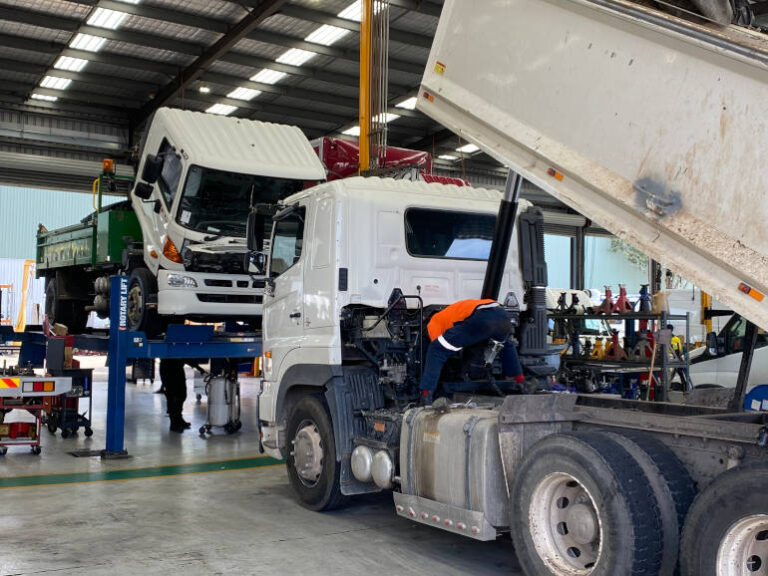
Activity 19 focuses on maintaining vehicles and equipment and contains some of the most detailed guidance in the Master Code.
The NHVR recommends creating service, inspection and maintenance schedules that reflect how vehicles are used. Businesses should combine routine inspections with more comprehensive periodic inspections and ensure operational schedules allow sufficient time for maintenance to occur.
Importantly, the Code highlights that maintenance cannot be treated as something that happens when a vehicle becomes available.
If delivery schedules, customer demands or operational pressures prevent maintenance from occurring, the organisation may be creating a safety risk.
The Master Code also emphasises the role of drivers in identifying defects through pre-start and post-operation inspections. Drivers should be trained to conduct inspections and, importantly, those checks should be recognised as paid work time.
Information Must Flow Between Drivers and Workshops
A recurring theme throughout the Master Code is communication.
The maintenance section specifically recommends creating information channels between drivers and maintenance personnel so that vehicle performance issues, faults and inspection findings can be shared effectively.
Many fleet organisations already collect large volumes of maintenance and telematics data. The challenge is ensuring that information is used to identify trends, predict failures and improve maintenance programs.
The Master Code recommends using multiple information sources to assess the effectiveness of maintenance programs and continuously improve them over time.
Technology Has a Bigger Role to Play
The vehicle modification and equipment section recognises the increasing role of technology in improving heavy vehicle safety.
Businesses are encouraged to identify and install systems that improve safety and support the transport task being performed. This may include cameras, telematics, fatigue management systems, load restraint technology, vehicle immobilisers and other safety-related equipment.
However, the Code also stresses that modifications must be properly engineered and assessed. Businesses should follow manufacturer recommendations, relevant Australian Standards and Vehicle Standards Bulletin 6 (VSB6), while significant modifications should be reviewed by an approved vehicle examiner.
This ensures that safety improvements do not unintentionally introduce new risks.
Every Modification Has Consequences
A practical reminder within the Master Code is that every modification affects the vehicle as a system.
Adding storage systems, toolboxes, cranes, tail lifts or other auxiliary equipment changes vehicle mass, load distribution and maintenance requirements.
The Code recommends establishing the total vehicle mass after modifications and ensuring all added equipment is incorporated into ongoing maintenance schedules.
For many operators, this may require closer collaboration between fleet managers, workshops, body builders and equipment suppliers.
A Shift Towards Lifecycle Safety Management
The vehicle and equipment activities contained within the Master Code reinforce a broader message emerging from the NHVR’s approach to Chain of Responsibility.
Safety is not just about what happens on the road. It begins with selecting the right vehicle, continues through maintenance and modification decisions, and extends throughout the entire lifecycle of the asset.
For fleet managers, many of these activities will already be familiar. The difference is that the Master Code now places them squarely within a Chain of Responsibility framework.
Rather than viewing procurement, maintenance and fleet replacement as separate operational functions, the Master Code encourages businesses to see them as essential safety controls that contribute directly to meeting their Primary Duty under the HVNL.
Organisations that already apply a lifecycle approach to fleet management are likely to find themselves well positioned. Those that still view fleet as simply a procurement category may discover there is more work to do as the industry adapts to the new Master Code.