
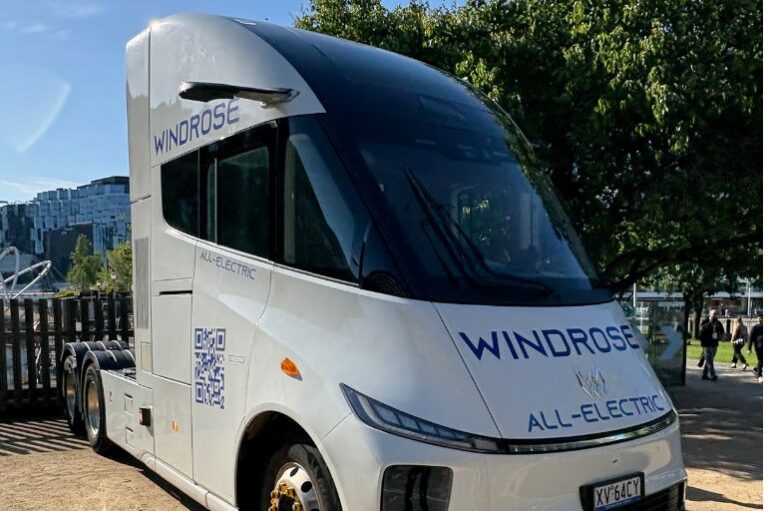
At All Energy 2025, JET Charge Co-Founder & CEO Tim Washington delivered one of the most candid and practical assessments of Australia’s electrification challenge—and he didn’t hold back when it came to the commercial trucking sector.
Washington has spent the last 12 years building JET Charge from a home-charging start-up into one of Australia’s major players in depot, bus and truck charging. But his most important message this year wasn’t about technology. It was about understanding the operators who keep freight moving.
“Trucking is an extremely competitive market. Most operators are running on margins below 5%. So telling them to buy an electric truck ‘because it’s good for the planet’ simply won’t work,” explains Washington.
For heavy-vehicle fleets, electrification will only accelerate when the charging and energy industry starts speaking their language—cost per kilometre, safety, labour constraints, and operational uptime.
The Realities Facing Heavy Vehicle Operators
Washington reminded the audience that the trucking sector is unlike any other segment entering the EV transition:
- Thousands of operators
- Multiple tiers of subcontracting and owner-drivers
- Tight margins and escalating labour pressures
- Safety and compliance obligations
- Intense pressure on productivity and uptime
In this environment, anything that adds cost or complexity is a hard sell.
“These fleets have trucks running into bollards, staffing shortages, EBAs coming up—V2G revenue streams are not their focus.”
Electrification must solve their problems, not create new ones.
Total Cost of Ownership: The Only Metric That Matters
According to Washington, nothing will shift until the industry proves—with real data—that electric trucks can deliver lower cost per kilometre than diesel.
Not environmental benefits. Not fleet image. Not future fuels compliance. Just cost per kilometre.
“I don’t want to tell them what a 60kW charger costs, or how much trenching costs. I want to tell them that all-in—truck, chargers, software, optimisation—they can run cheaper than diesel.”
This is the key to mass adoption.
Why Electrifying Depots Requires New Thinking
Washington was blunt: depot electrification is orders of magnitude harder than passenger charging.
Challenges include:
- Multi-MW loads in constrained industrial zones
- Long cable runs across yards
- Complex load management
- Mixed-speed charging (fast turnarounds vs overnight takes)
- Integration with fleet management platforms
- Reliability requirements that exceed public charging
He also warned that the software layer will become mission-critical:
- OCPP 1.6J will not be enough
- OCPP 2.0.1 and 2.1 migrations are coming
- Data sovereignty requirements are emerging for logistics, ports and government fleets
- Operators will need interoperable, Australian-developed software capable of asset, energy and operational optimisation
“If you run heavy vehicles, your charging software becomes part of your logistics network. It can’t fail.”
Why Government Grants Still Matter (For Now)
Washington was clear that the early movers in zero-emissions trucking have not succeeded alone.
“Every major truck project in Australia has been funded by ARENA. That’s what it’s there for—to kickstart the industry.”
But subsidies aren’t a long-term strategy. They are the bridge until:
- model availability improves
- charging volumes scale
- TCO reaches diesel parity
- depot standards mature
- operators gain confidence
Stop Selling Technology. Start Solving Operational Problems.
One of Washington’s strongest messages to the charging industry was about mindset. Charging providers, OEMs and energy companies too often approach fleets with technology-first narratives.
“We think we’re special. We go to fleet operators and talk about VPPs, FCAS revenue, and wholesale market integration. They don’t care. They care about getting freight out the door.”
The winning formula?
- Reduce cost per kilometre
- Improve uptime
- Fit into existing operational rhythms
- Minimise construction and grid delays
- Provide simple, reliable charging hardware and software
- Offer service and support tailored to commercial fleets
The Electrification of Heavy Vehicles Is Coming—But Only If the Industry Changes First
Washington stressed that electrification in the commercial trucking market represents a massive opportunity—but only for the companies willing to adapt.
With national emissions targets requiring millions of new EVs and tens of thousands of new chargers, the heavy-vehicle sector will be central to meeting 2035 goals.
But none of the transition will succeed if solution providers fail to understand the operating environment of fleet, logistics and freight businesses.
“If we want trucking fleets to transition, we need to speak their language—and give them a lower cost per kilometre than diesel. Everything else is noise.”
Washington’s message is clear:
- The technology is advancing. The funding is helping. The targets are set.
- But the future of heavy-vehicle electrification will be shaped by practicality, not hype.
If charging providers, OEMs and the energy sector can deliver operationally reliable, cost-competitive solutions, the transition will accelerate rapidly. If they can’t, diesel will dominate far longer than emissions targets can tolerate.