
Electric buses are often described as one of the easiest heavy vehicle applications to electrify because they operate scheduled routes and return to base. Ventura Bus Lines’ experience shows that is true, but only when the vehicle, depot, charging infrastructure and energy management systems are planned together.
Jeremy Gunnell, Executive General Manager – Assets at Ventura Bus Lines, said the company already has practical experience operating electric buses from a fully converted depot.
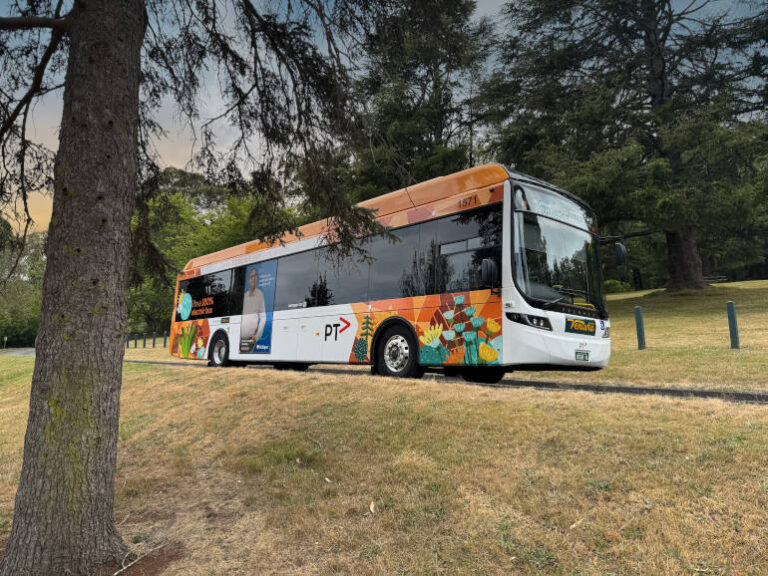
“At present, we’ve got 27 track buses in our fleet,” Gunnell said. “We run a fleet of 27 fully electric BYD buses there. So there are BYD chassis with a Volgren built body locally here in Melbourne.”
The buses operate from Ventura’s Ivanhoe depot, which was previously a diesel bus depot before being converted for electric operations.
“We traditionally owned that patch of dirt there as a depot that ran diesel buses, and we converted that depot in its entirety,” Gunnell said. “Our team project managed that from front to back, with the support of a couple of key suppliers, and that’s for the last three or so years, has been a fully electrified depot that runs all our local services.”

Electric buses prove reliable in service
For organisations still assessing the risk of zero emission heavy vehicles, Ventura’s experience provides a useful signal. Gunnell said the buses themselves have performed well.
“The actual vehicles themselves are very reliable and very consistent,” Gunnell said. “All of the vehicles themselves are incredibly reliable and proving to be a very good purchase.”
Ventura selected BYD chassis with Volgren bodies, combining electric bus technology from China with a local body builder already known to the business.
“The chassis themselves are a fully imported base chassis from China,” Gunnell said. “BYD is a fairly big player in that space, and where we had comfort with that particular type of vehicle is that the bodybuilder was Volgren. We’ve traditionally purchased those vehicles for a long time, and have a lot of history with them as a business partner.”
The decision was also influenced by cost. Gunnell said Ventura operates many diesel buses from European brands, but electric pricing changed the procurement equation.
“The lion’s share of our fleet in the diesel powered vehicles are both Scania and Volvo, but the price point for that electric European build versus the Chinese spec equivalent, there’s probably a delta of about 30% on that initial purchase,” Gunnell said.
The performance has given Ventura confidence to continue with the platform.
“Given the Chinese technological advantages and speed in which they operate in that EV platform, it made sense to go with them,” Gunnell said. “And to their credit, we’ve had great reliability, great after sales support, and we’ve actually just recently placed an order for another 22 chassis with them.”
Scheduled routes make charging easier
The operational profile of route buses makes them suitable for electrification because charging can be planned around timetables.
“The one sure thing is that there’s a morning peak and an afternoon peak,” Gunnell said. “We’ve got appropriate infrastructure to charge the vehicles to full capacity overnight, and then most of them will go out and do a morning run.”
Ventura also uses the break between peak periods for opportunity charging.
“In most instances, on that depot, they come back to base for their break,” Gunnell said. “So we then use that period of when drivers have a break to do opportunity charging, and that gives them enough of a top up to go and facilitate the afternoon running, and obviously come home at night to be fully replenished.”
Gunnell said the range on the buses is more than enough and can be charged to full capacity in about three hours.
“The buses themselves are probably good for around 400 kilometres, thereabouts,” he said. “We can charge them in around three hours to full capacity.”
Energy management is the new challenge
While the vehicle performance has been strong, Gunnell said the complexity of electric bus operations sits in the charging and energy systems.
“It is proving to be a good, reliable pathway forward, given the uncertainty that we have in the world at the moment around oil resource,” Gunnell said. “But it doesn’t come without challenges, because there’s a lot of science behind the way in which the chargers work.”
For Fleet Managers, this is one of the biggest changes. Diesel fleets manage fuel supply and refuelling. Electric fleets need to manage state of charge, power demand, tariffs and charging windows.
“There’s a lot of science behind the way in which the chargers work, and also managing around where your high demand tariffs are and peak demand tariffs,” Gunnell said.
Ventura uses digital systems to control charging rather than simply charging every bus immediately.
“We’re lucky with our overarching electrical platform, our overarching digital platforms, that we can control when chargers will and won’t operate irrespective of the bus battery state of charge or if the bus is plugged in or not,” Gunnell said.
The next step is improving how charging decisions are linked to routes and electricity pricing.
“That’s probably where a lot of our attention is drawn at present, is how to continually get further enhancements there, around charging opportunities, time of day in which you do charge, and also understanding your state of charge of the vehicle versus the run that the bus is going on,” he said.
Tendering will reward mature operators
Government policy is also pushing the market forward. Gunnell said Victoria’s net zero strategy has changed future bus procurement.
“As part of the government strategy for net zero by 2045, it was about 12 months ago where they put a pause on all further diesel purchases,” Gunnell said. “So everything from that point in time onwards has to be an electric vehicle.”
Ventura is now looking at other sites that may move towards electrified operations, although the infrastructure model may differ by location.
For operators bidding for future contracts, the ability to manage charging efficiently will become a competitive advantage.
“When you’re tendering on projects or new opportunities, you need to have those smarts well oiled,” Gunnell said. “If you’re not going to compete in that tender process with all the latest technology and cost saving benefits, you probably won’t be successful.”
Ventura’s experience shows that electric bus transition is not just a vehicle replacement program. It is a depot, infrastructure, energy and data project.
For Fleet Managers, Sustainability Managers and Finance Managers, the lesson is clear. Electric buses can work in daily service, but the best results will come from organisations that understand the full operating system behind the vehicle.