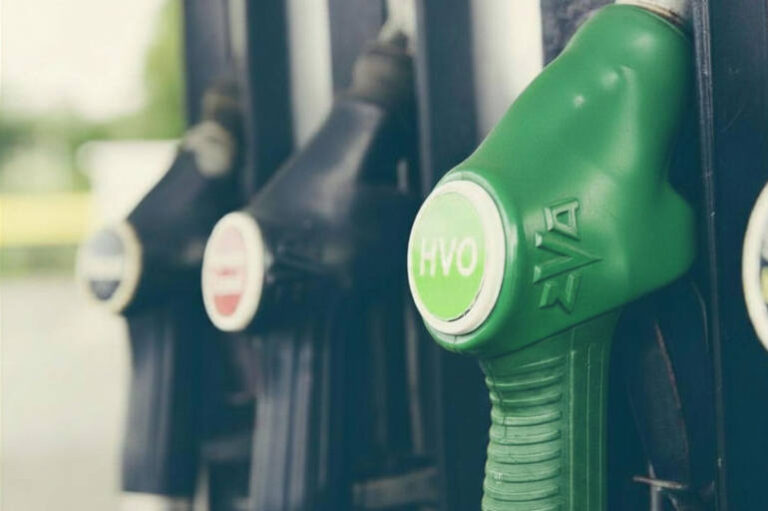
Ford Australia has become the first mainstream light commercial vehicle manufacturer to formally support the use of Hydrotreated Vegetable Oil (HVO) renewable diesel across its latest diesel-powered Ranger, Everest and Transit models, giving fleet operators another option to reduce emissions without changing vehicles.
The announcement, made at the MY26.5 Ranger and Everest launch, signals growing momentum behind a multi-pathway approach to transport decarbonisation that extends beyond battery electric vehicles.
While truck manufacturers have been discussing and supporting HVO for several years, Ford’s move is significant because it brings the renewable fuel conversation into the light commercial vehicle market, where many fleet operators continue to rely on diesel-powered utes and vans for operational reasons.

Ford Australia Marketing Director Ambrose Henderson highlighted the development as an example of local innovation responding to customer needs.
“As I mentioned at the start, we have 1,500 personnel in Ford Australia, and every day they are innovating, they are investing in the next update, the next generation, the next advancement,” Henderson said.
“One example of that is what we announced earlier this week, and what you’ve got in front of you, which is the fact that our next-gen Ranger and Everest, from launch, as well as our Transit range, can use biodiesel, can use renewable diesel.”
The ability to use HVO without impacting vehicle performance or warranty support removes one of the key barriers that has slowed adoption among fleet operators considering renewable fuels.
For many fleets, particularly those operating regional vehicles, towing heavy loads, or requiring long operating ranges, the transition to lower emissions is unlikely to be achieved through a single technology. Instead, fleet managers are increasingly evaluating a mix of battery electric vehicles, plug-in hybrids, renewable fuels, hydrogen and efficiency improvements based on operational requirements.
That approach mirrors the position taken by several vehicle manufacturers in recent years, who have argued that achieving meaningful emissions reductions requires multiple technologies rather than a single solution.
Ford provided a real-world example of this strategy already being implemented by one of its fleet customers.
“The Melbourne Airport Corporation has been running renewable diesel in their fleet of diesel Ford engines for a while now, and they’re actually expanding it to their entire fleet,” Henderson said.
Melbourne Airport’s experience demonstrates one of HVO’s key advantages. Unlike battery-electric vehicles, HVO can be used in existing diesel vehicles and refuelling infrastructure, allowing organisations to reduce lifecycle emissions without replacing vehicles or investing in charging infrastructure.
In the heavy vehicle sector, manufacturers including Scania, Volvo Trucks, Mercedes-Benz Trucks and others have supported HVO-compatible engines for several years. However, adoption in Australia has been constrained by limited local production and fuel availability.
That situation is gradually changing as fuel suppliers explore opportunities to expand renewable diesel supply, particularly for commercial and government fleets seeking practical ways to reduce transport emissions.
Henderson believes the technology is particularly relevant given current discussions around fuel security and fleet sustainability.
“In a time like now, where there’s a lot of discussion about fuel and fuel security, it’s a great example of the innovation that our team are delivering every day,” he said.
“The fact that our cars can run on this alternative fuel is just another proof point of that.”
While HVO is unlikely to replace electrification as the primary long-term pathway for passenger vehicles, it offers an immediate opportunity for fleets operating diesel-powered utes, vans and specialist vehicles to reduce emissions using assets already in service.
For fleet managers, the announcement provides another tool in the decarbonisation toolkit. Combined with the arrival of the Ranger Plug-in Hybrid, the Mustang Mach-E, and ongoing improvements in diesel efficiency, Ford’s strategy reflects the growing reality that reducing transport emissions will require multiple technologies working together rather than a single winner.