

Transport operators are deploying more cameras, telematics, fatigue systems and AI-enabled tools than ever before. But the success of those investments will often depend less on the technology itself than on how it is introduced to drivers.
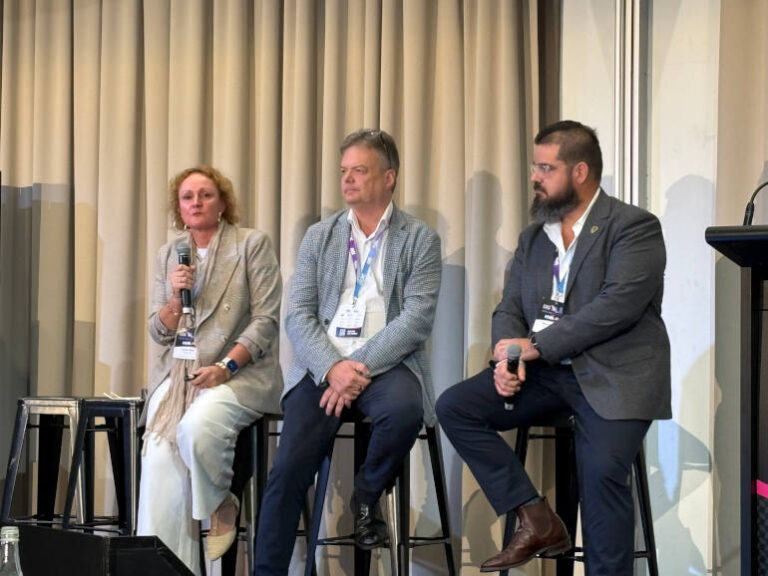
That was a clear message from the TruckShowX session featuring WHG Technologies Director of Operations Dylan Hartley, Wettenhalls Chief People Officer Jackie Allen and FBT Transwest Managing Director Cameron Dunn.

For Allen, the starting point is being open with drivers about what the technology does and why it is being used.
“We don’t shy away, we say we’re monitoring you,” Allen said. “But what we’re not doing is tracking you all day, every day, and stalking you all day, every day.”
The distinction is important. Transport remains a high-risk working environment, with drivers often working alone for long periods and facing fatigue, distraction and roadside risks without immediate access to a supervisor or colleague.
“If you’re out on the road and you’re on your own, there is no one there monitoring you, unless we’re doing it,” Allen said.
“So when you can’t take care of yourself, we’re going to be there to take care of you through the wearables, through cameras, through whatever it needs to be to keep you safe.”
Allen said the safety objective needs to be clear to drivers: the technology is there to help bring them home safely.
“My job is to get you home and back to your family each and every day,” she said.
That approach also challenges assumptions that experienced or older drivers will naturally resist new systems. Allen said Wettenhalls had seen long-serving drivers adapt successfully when technology was introduced with practical support and a clear purpose.
“One of our longest-serving drivers has been with us for 39 years, and he’s adopting technology extremely well,” she said.
“Age is not a barrier for adopting technology.”
The experience of FBT Transwest reinforces that point. Dunn said the company expected some resistance when it invited drivers to participate in a wearable fatigue-technology trial, but the response was more positive than anticipated.
“When we put it out to our drivers, I thought this is going to be a bit of a push,” Dunn said.
“It was quite the opposite. When they heard that it was actually a wearable, and they could have some input and give some feedback, they just jumped on it.”
Giving drivers a role in the trial was part of the difference. Rather than presenting the system as a completed management decision, the operator invited drivers to test it, comment on it and help shape how it could work in practice.
Dunn said FBT Transwest explained the trial in direct safety terms.
“It’s about us looking after you,” he said. “That conversation seems really positive.”
Wearable technology may also help operators move away from some of the resistance associated with driver-facing cameras. While cameras can be valuable in identifying fatigue and distraction, drivers can perceive them as a constant presence in the cab.
Allen said wearables create a different relationship between the worker and the technology.
“It doesn’t look any different to my Apple Watch,” she said. “It’s technology that’s with you, and it’s really helping you monitor.”
Hartley said the technology should not be viewed in isolation. Wearables, cameras, vehicle telematics and back-office monitoring can complement each other, creating more accurate information and helping operators intervene earlier.
He said fatigue systems can sometimes generate alerts that drivers do not agree with, which makes confidence in the technology important.
“There wouldn’t be a person in the room here who hasn’t had a discussion with the driver where you’ve told them, ‘Mate, I’m getting alerts, you’re tired or you’re distracted,’ and he goes, ‘I’m not,’” Hartley said.
Wearables can help provide another data source to support or challenge those alerts, rather than relying on a single system to make the call.
For fleet operators, the broader lesson is straightforward. Technology adoption is not simply an IT, procurement or safety project. It is a workforce engagement exercise.
The most effective implementations will be those where drivers understand what is being monitored, how the information will be used, what support they will receive and how the system contributes to a safer working day.
When technology is framed as a tool that supports the driver rather than watches them, resistance is more likely to turn into participation.