
Artificial intelligence is becoming one of the most talked-about technologies in transport, but fleets should not expect it to solve operational problems without first getting their systems, data and processes in order.
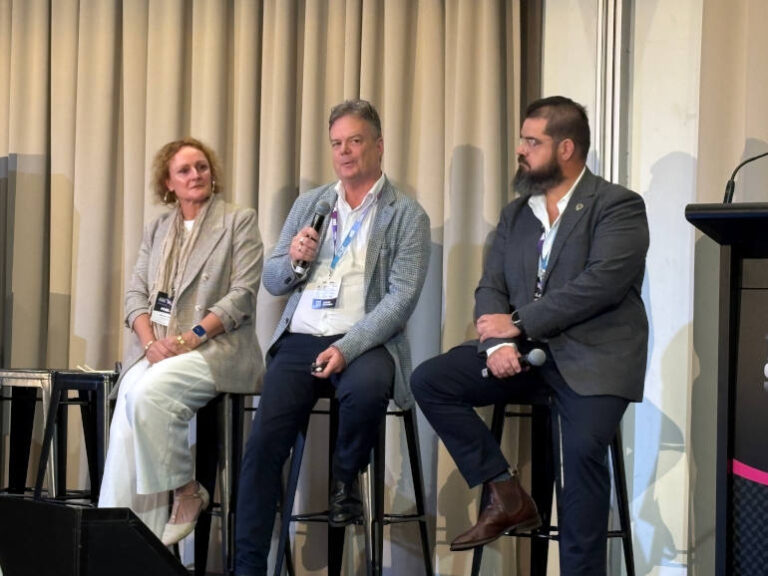
That was the message from a TruckShowX discussion featuring WHG Technologies Director of Operations Dylan Hartley, Wettenhalls Chief People Officer Jackie Allen and FBT Transwest Managing Director Cameron Dunn.

Hartley said there was growing interest in using AI to improve safety, maintenance, scheduling and back-office efficiency, but the best outcomes come when fleets take a practical approach rather than rushing to deploy new tools.
“I think it’s really starting off with a solid foundation,” Hartley said. “In order to be able to innovate, you have to have a solid foundation.”
For many fleets, that foundation is not an AI platform. It is understanding the information already being collected through telematics, cameras, compliance systems, maintenance platforms, trailer technology and other connected systems.
Hartley said operators were increasingly trying to integrate those systems and get more value from existing investments.
“There’s definitely a trend around wanting to try and integrate systems and maximise outcomes, be it a safety outcome or return on that investment or maintenance improvement,” he said.
“The whole industry at the moment is trying to work out how to do more with less.”
That includes improving maintenance scheduling, reducing manual administration, streamlining back-office teams and identifying which functions should remain internal and which can be handled by specialist providers.
But Hartley warned that fleets should not start with the technology itself. They should first identify the operational problem they are trying to solve.
“I think what’s important is understanding the data that you’re building from first, understanding the systems that you have in place, get that consolidation right, and then look to layer on top of it all the services and innovation that comes with it,” he said.
For FBT Transwest, the opportunity is clear, but the starting point depends on the operating environment.
The business operates in bulk haulage and manages a major hazard facility, where its safety, compliance and emergency-response obligations are particularly demanding. Dunn said the business sees a role for AI in improving auditing and the management of critical controls, but regulatory and paperwork requirements still limit how far digital systems can replace manual processes.
“In terms of dangerous goods, you still are required to have a lot of paperwork,” Dunn said. “Our critical control measures are all paper-based or human-based and administrative.”
Dunn said the immediate opportunity was to use AI in back-office and depot operations, including auditing and reviewing processes that are currently reliant on manual checks.
“The reality for us to use our AI in that back-office plant for auditing and stuff like that, that’s going to be our focus,” he said.
The example highlights a key point for fleet managers: AI adoption will look different depending on the operation. A fleet focused on urban delivery may see quick gains in routing, customer service or vehicle utilisation. A dangerous-goods operator may place more emphasis on compliance, incident prevention and critical-control assurance.
Hartley said the value of AI also depends on whether technology providers can move from simply reporting what has happened to identifying a potential issue before it affects the customer.
“Our role as your tech providers is to try and find a problem before you even know that that problem exists,” he said.
“The easiest way for us to do that is we work in parallel with regulators and authorities to make sure that we reduce malfunctions, and if something stops working, we find it first.”
WHG Technologies uses data across its back-office systems to identify potential faults or problem areas and report them to customers before they become a larger operational issue.
“We churn through data, and we try and identify those problem areas, and then we report it to the customer first,” Hartley said.
“That’s the biggest growth area for us: trying to deliver a quality service and a seamless experience where we can actually find your problems before you realise that they’re there.”
For fleets, the practical lesson is that AI should not be treated as a standalone project or an additional dashboard. The aim should be to simplify the technology environment, connect the systems that matter and use data to improve decisions.
As Hartley noted earlier in the session, fleets do not want more dashboards. They want fewer systems and better outcomes.
The organisations most likely to benefit from AI will be those that first understand their operational priorities, clean up their data, connect their core systems and then apply AI where it can reduce risk, remove manual work or identify problems earlier.